
Week 7 - Research and Theory
- Tramaine Berry
- Nov 7, 2020
- 11 min read
Updated: Sep 21, 2023
RESOURCES //
Lecture


Metaphysics is a philosophy defining reality and our understanding of it. I've come across a movement call 'metaphycial painting', which is similar to surrealism because it creates a sense of stepping into a dream, in fact, it was the start of the surrealist movement. It started in 1910 and was also known as 'Giorgio de Chirico'. This reminds me of last week's work when I was incorporating unconscious ideas into the everyday enviroment.

I agree with Empiricists that experience is the ultimate starting point for knowledge. In contrast, rationalism believes that ideas are 'inborn' in the human mind rather than being recieved from experience. I've heard of artists and designers that can stare at a blank piece of paper and ideas just come to them such as Roy Cranston. Roy Cranston is a freelance graphic designer that focuses on textured typogrpahic posters. Although his inspiration comes from other designers and online resources, he claims that as designers we have a habit of distracting ourselves instead of imbracing boredom.(54:38 mins into the video). Rosanne Somerson, the president of the Rhode Island School of Design, found that encouraging students to not leave their seat and push through the uncomfortable boredom causes them to explore new territories. For me, my best ideas come at random when I am experiencing the everyday, and once I have an idea, only then would embracing boredom allow me to develop an idea further. I think it is important to know how your individual mind works, which requires testing out different creative methods. This brings me back to Anthony Gidden's 'Modernity and self-identity' from week 3, which talks about self-therapy and how self-observation creates personal growth.
Empirical research refers to systematic obsevation or experiential research that can be achieved through quantitve and qualitve methods. Non-empirical research doesn't use qualitive or quantative methods of data. This has changed my view on quantative and qualitive research methods and how they co-exist with one another; a successful project cannot exist with only one of the two research methods.
The Theory & Practice of Research for the Creative Industries


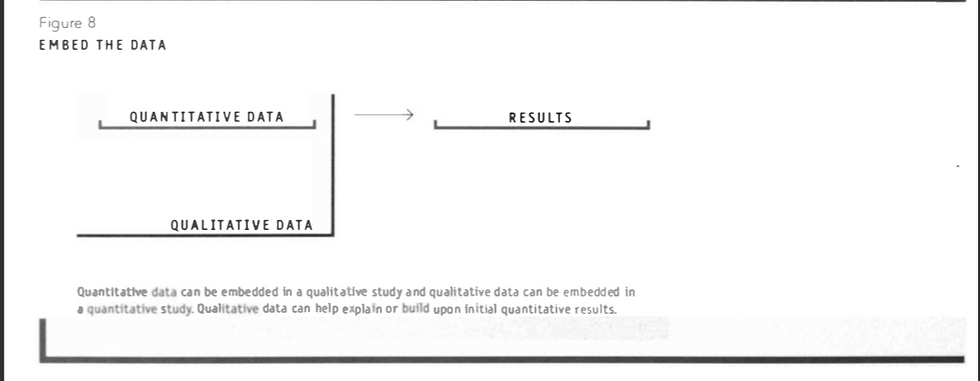
Design Research: Methods and Perspectives

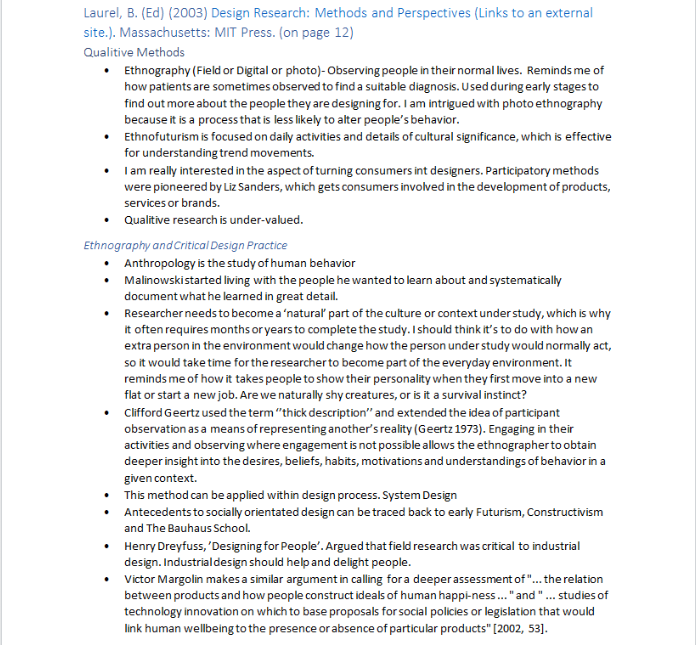
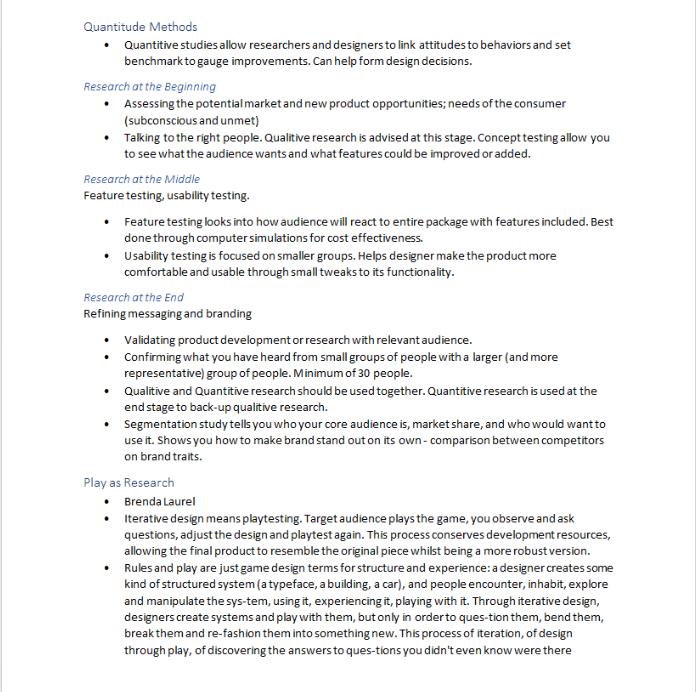

I don't think I would use iterative design as a development process because it is more satifying to compare the start to the final piece when there is a large difference in how it performs. However, I can see how this process would be important in the business world in terms of time and budget.
Visual Research: An introduction to research methods in Graphic Design


I have found Cooke's method easiest to digest out of the methologies I have looked through so far due to the amount of detail he has put into it as well as being able to present it as a visual structure.
WORKSHOP CHALLENGE //
What is an object?
A material thing that can be seen and touched.
Etytomolgy of 'object' is medieval Latin for 'thing presented to the mind'. c.1400, objection, 'to bring forward as a ground of opposition, doubt or criticism'.
'ob' means towards, against, before, near, across, down. In other words, it's a sense of direction or arrangement.
What object should I choose?
Dad's cookbook:
- He passed away in 2015
- Contains dad's handwriting
- Memories of cakes being made
- I've convered some recipes to fit my vegan diet
Thesaurus:
- A present from dad
- Unused, which shoudn't be the case due to my dyslexia
Knitting kit
- This kit has been growing since my mid-teens with the help of my auntie, cousin and a friend of the family. The friend of the family taught me how to knit. It was difficult for me to remember how to knit by just observing, so she guided me as I was in the proces of knitting (not sure if that had something to do with my dyslexia).
- For me, kniting is a form of meditation and releif from the everyday stresses. It is also a transformative process (reminds me of how Eatlock's car alarm dance in week 5), turning negative energy into a work of art. It is a satifying feeling to finish and present as a thoughtful gift.
- Too impatient to knit large things because I love trying out new yarns and patterns, so I usually stick to scarves.
- A gift that keeps giving
Uncle's ties
Last year on Christmas Day, I came out to my family and my Uncle gave me his ties, which he was originallly going to give to charity. For me this gestare symbolises acceptance.
MacBook
- Since Novemener 2016, first year of university BA.
- Life is in my MacBook rather than a handbag. I take it everywhere, using it for entertainment, socialising and design work.
- Has the brain diversion theory on the front of laptop, which I can now see is controversial after research.
Chosen Object: Dad's Cookbook

- I've found 2 vegan recipes! Vegan Chocolate Gateau (pg.410) and Vegan Dundee Cake (pg.412)


Qualitive Research: Memories
Fruit cake in lunchbox everyday. Or weekends would have it hot with custard.
Chocolate cake every birthday
Foraging for berries and making fruit pies
A freezer full of homemade deserts when he passed
Sponge pudding, Bread and Butter pudding. Hot tea/banana bread with butter spread. Upside down cake (pears). Treacle tart. Lemon drizzle cake. Raisin biscuits.
Scents: Cinnamon and nutmeg
Made me forget that we lived on a low budget
60s-80s Music in the background
Sister would stay in the living room watching cartoons
Licking the bowl
Themes:
Traditional
Sugar - Irony that he died from FH. Reminds me of the amount of sugary cups of tea he had everyday. I wonder if the amount of baking has influenced my sweet tooth as an adult?
Single Dad
Family cooking - strong bond
practice makes perfect
Quantitve Research
History
Etymology of Cookbook- Book containing recipes for cooking
Cook- To prepare in an appetizing way by various combinations of material and flavouring''
Oldest Cookbook is a set of four clay tablets in 1700 BC. Meat stew
Baking is associated with cooking
Food has it own language
First english cookbook was in 1390, written by King Richard II chefs.
Wellbeing in Cooking
Meditation approach. Escapism. Bringing order to chaos with multiple bowls of ingredients. Being in the present. Space for new thoughts , feelings and creativity.
"'Meditation as a concept is this idea of taking time out of your day, shutting everything down, and withdrawing into yourself for a period of time", Dr. Harry Ritter.
Improves mood and self-esteem
Young adults who engage in maker activities was linked to positive subjective well-being. Mood repair, socialising and staying present-focused.
Effective tool in grief management
Ripple effect of mking people happy
Turning a chore into an experience
Acts as a buffer against uncomfortable memories
Memories and Cooking
Smell and taste is what memories are made of. Taste impacts sense of smell, but smell is most closely linked to memory.
Transported back to whenever a flavour was first tried. Turning back time (time machine).
Savouring moments. Details of surroundings.
Associated with security and togetherness. But childhood memories can influence how you view food as an adult.
Cooking Today
Cookbooks are being replaced through mobile phones: 59% of 25-34 year olds. But this would make screen messy. Video guides help digest cooking process.
31% of 25-34 year olds say choosing what to cook is least enjoyable part of cooking process. I can imagine that cleaning up afterwards would be the worst.
Ideas
Photograph process of making a vegan version of dad's fruit cake..or maybe turn it into a video storyboard of represent modern process of cooking.
Turn dad's handwrittting into title of editorial.
Maybe even recreate cookbook using selected recipes, but illustrate how to make the process seem less chaotic.
Visual scents and memories. Maybe I could do a documentary of cooking my dad's famous fruit cake, recording memories that come to mind, scents, textures, and taste.
Survey favourite food memories on the course.
Etomology inspires me to show all the layers in a recipe (ingredients and flavourings). Maybe I could should emotional layers as well?
Cooking Documentation
Using Dad's cookbook, I have chosen a fritcake recipe that has been made most frequently in our household. The objective of this documentation is to capture memories triggered by the senses, and transform this tradition in today's digital format (it's going to look like a video storyboard). Since I last made this recipe I have turned towards a plant-based diet, so I have replaced the 5 eggs with 3 bananas, and substituted butter for plant-based margarine.


This documentation will show that I have cleaned as I was cooking, allowing me to enjoy the process as I went along and reducing the amount I had to clean at the end. All the ingredients were placed into seperate bowls in order to create order in a choatic kitchen.
Both the butter and bannanas wre microwaved for 30 secs so they would mix better and reduce any lumps in the mixture. And the bananas were marinated in the spices for increased flavour.

This documentation session has been an excellent excuse to bake, especially on the day me and my flatmates gather to watch bake-off. Maybe this could illustrate the making of new memories using something that has been passed down. Speaking of memories, I have also burnt myself when taking out the cake so that is going to act as a memory along with other cooking scars I've had in the past. One time, I was teaching my sister how to bake, I was explaining how to take a cake out of the oven (she found it patronising), and then I ironically burn myself.
To improve this documentation process, I would have liked to record the time it took me to do each cooking task because then I could have used it to make the vidoe storyboard more accurate.

Memory flashbacks during cooking:
Being directed on what to do
Licking the bowl with my sister
Making a mess of the worktop when sifting flour
Emptying mixture into tin
Tasting the cake brings me back to packed lunches in school. Blissful. Intense flavours
Senses:
Very tangy orange (zesting and juicing orange)
Silky greasy butter (greasing the tin)
Sweet, warm spice, citrusy (Licking the bowl)
Warm. Doesn't smell like christmas becasue it is an all-year-round cake in the past..smells like my childhood home (cake baking)
Very rich. Slightly crunchy on the edges, so I needed a bit less time in the oven. (cake testing)

This is my first draft, which is just me trying to figure out the scale and placement of each asset. I have used dad's handwritting as the title, although it needs to be in the background.
This feels like a family photo-book for some reason.


Tutorial
Paul liked the memory flashbacks that I recorded due to how the were triggered by the senses. An artist called Wassily Kandinsky was suggested to inspire my work, which explores a synesthisal approach towards art. Looking at my work I've done so far, I think the experience of my documentation needs to come through more, which can be achieved through visual scents and memories. I wonder if I could look at sensory illustrators for memory.
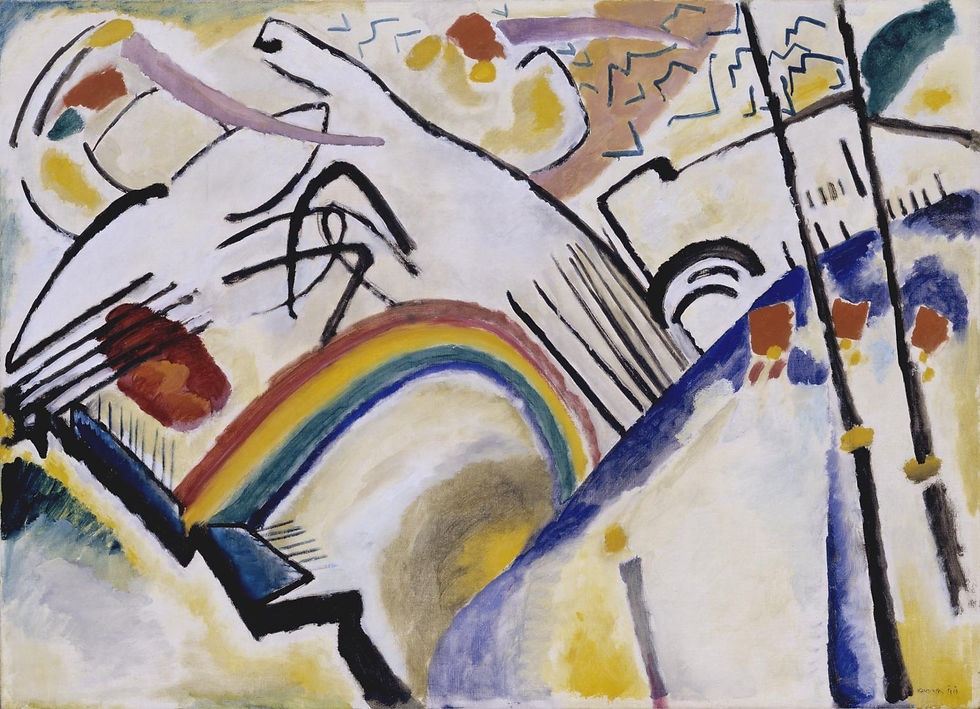
Another artist with synethesia is Melissa McCracken. She creates abstract paintings inspired by music. I've chosen the paintings inspired by my dad's favourite music. My favourite piece because of how explosive it is, and I can see how I can express the intensive flavours and smells in my cooking process.

This also reminds me of how some autistics have sensitive sensory, so this would be under or over responsiveness to stimuli (sight, sound, smell, taste, touch, balance, body awareness).

These pieces of work are abstract landscapes of th journeys of exile from Spain to England, 1962-1975. I like this work because she is taking inspiration from period suitcases and telling a story through markings.
"Being an artist connects me to people. It gives me a language with which to share my unusual vantage point. I feel lucky that my subjects are quite relatable, and I’m allowed to be hyper sensitive and emotional in my work. In fact, being autistic is an advantage because in an arts context it’s more than OK to be a bit unconventional, indeed it helps."
Another interesting autistic artist I found is Anna Berry. This piece is a kinetic installation lined with cones that breathe, creating a multi-sensory experience. Although this installation looks like paper, its actually fabricated from Tyvek.
This isn’t an abstract concern for me, but one born out of my own struggle – it’s been apparent to me since childhood that my experience of the world is very different from the neuro-typical one.
I have used my cooking experience to inspire a synethesic piece of art that was produced using photoshop. This was inspired by the mixing process of baking and also illustrates the warm flavours combining together. Texture is overlapped in the left piece, whilst the right piece is overlapped with nostalgia (flashbacks blurring the present).


This piece is an unflattering photo taken of me (younger) by my dad whilst I was sleeping. I overlapped this photo onto the sensory art to show how these flavours come to life in the mind. It also captures the moment when you first taste something familiar and you can't help but close your eyes as you say 'mmmm'.

I came across this interesting piece during my research, which didn't seem to have an artists' name attched to it. I like how something can be seen in the mind and I began to question whether the memories I experience from familiar senses can be presented in this way.


I used a photo of me and my sister in the kitchen cleaning the berries we foraged becuase it was the only photo I could find of the kitchen. I used a cutout filter to make the memory suit the style of the sensry background. To improve this piece, I could have handdrawn a memory of me and my sister licking a spoon because the sensory background was inspired by the raw mixture of the cake. Additionally, I could have reproduced my dad's summer berry pies so the sensory background would suit the memory.

I decided to pair this sensory piece with the cookbook opened onto the fruitcake recipe with a loose piece of paper on top (there are a few loose notes he kept within the cookbook). I wanted to incorporate the recipe page because I wanted to make this spread show what object I choose, and create a clear narrative on what the sensory art is about. The blank note paper provides negative space for me to overlayer my text into this publication, but at the moment this is still placeholder text.

Because I had photographed the book and the loose piece of paper separately, the pieces didnt look like they belonged together, so I meged them together and changed the colour balance. A orange filter has been added to suit the warmth created by the sensory art.

I placed dad's handwritting onto the left side of the publication because it looked unnattural on the photograph.
Feedback

Development

Based on the feedback I recieved from my second group critique, I have taken away the skull and made the memory look like it is emerging from the mixture; the skull seems unneccessary in a warming experience. The handwritting is merged into the imagery to make it look like it has been written onto greasy paper; my dad had a habit of getting writting paper greasy with oil or butter during the cooking process.

I have layed my text out like the cookbook and used the photos I took during documentation; the photo of the cookbook seemed too heavy with my already sensory heavy artwork, and the photo I used was bad quality. And there is a page number because I wanted to reference where in the cookbook the recipe could be found.
To improve this piece, I could incorporate some smudges from the many times the cookbook has been touched by cake mixture or sticky ingredients. I could also make the page look worn out on the edges by turning it yellowish or by printing it out.
DISCUSION //

REFLECTION //
I started this week with only one object in mind (the cookbook) due to the fact that most of my sentimental objects are scattered between family members since my dad's passing, and most items were left behind when I had to move out of my dad's flat (it was just me and him in the flat at the time). Living in a single room during my undergraduate degree encourged me to be less materialistic with possessions. However, dispite not having a lot of sentimental objects, the lecture encouraged me to look more closely at the possesions I had in my room.
I have found feedback from peers very helpful and I enjoyed the whole process of making something very personal. I feel that the spread for my final piece looks like two seperate halves, so I need to add layering elements that were lost during delvelopment. Maybe I could bring back the layered paper from the cookbook or add bits of mixtur to resemble a messy cookbook.
Looking at the resources was difficult to get through. Completely went over my head if I'm being honest, but I think I would have digested it easier if I had read the 'Why and How in visual research'' first. To add to this, the drama with the US president elections and England's second lockdown has lead me distracted.
I am very interested in the different types of qualitive methods, but have realised how important it is for quantitve research to back up the qualitive findings.
RESOURCES //
Chapter 1 Why and HowinVisual research: an introduction. by Ian Noble; Russell Bestley
Creative research; the theory and practice of research for the creative industries pp. 36--41, 42--47, 50--53, 54--57. Hilary Collins
Design research; methods and perspectives pp. 23--29, 30--38, 63--69, 176--184. Brenda Laurel
https://www.archdaily.com/789488/why-boredom-is-the-key-to-good-design
Modernity and self-identity; self and society in the late modern age (The Trajectory of the Self). Anthony Giddens
https://mymodernmet.com/melissa-mccracken-synethesia-paintings/
https://metro.co.uk/2018/04/21/these-10-artists-prove-autism-is-no-barrier-to-creativity-7446895/


Comments